

Challenge 11. “Anomaly Detection and Predictive Maintenance Model Based on Process Data”
About Espiga R&D
Espiga R&D is an innovation center specializing in the field of cereals, covering their various processing methods and end uses. Its work focuses on generating and applying knowledge to improve product quality, optimize milling processes, and add value throughout the entire agri-food chain.
The organization combines its pilot plants of various scales with analytical, laboratory, and experimental capabilities, drawing on its in-depth knowledge of industrial processes and working closely with companies in the grain sector to address technical and production challenges. Its approach integrates both the development of practical on-site solutions and applied research focused on raw materials, processes, and the final product.
In this context, Espiga I+D seeks to advance the integration of new technologies that will enable it to improve process control, real-time monitoring, and the use of industrial data, with the aim of continuing to deliver value to its customers and strengthening its position as a technical leader in the sector.
To address these challenges, ESPIGA R&D serves as the corporate R&D unit for the Harinero MHM Group, as well as for HARIVENASA, a facility dedicated to oat processing, with whom it will collaborate in evaluating the proposed solutions.
Check out Challenge 11, which Espiga I+D has submitted to the Open Innovation program.
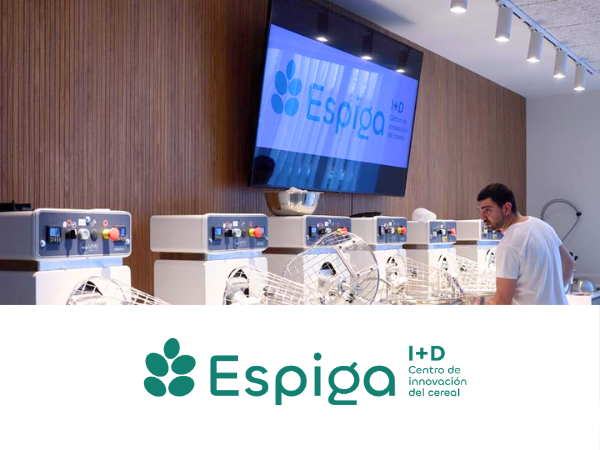
Challenge 11.“Anomaly Detection and Predictive Maintenance Model Based on ProcessData”
Currently, incident analysis at the plant is conducted reactively, after a problem has already occurred. Although the companies affiliated with Espiga R&D have data collection systems that record what happened prior to an incident at one of their production plants, this information is not being systematically used to anticipate failures.
Thus, this working model has several limitations:
A reactive approach to incidents.
Underutilization of historical data.
Difficulty in identifying patterns that precede failures.
Reliance on manual analysis.
In this context, the challenge is to develop a learning model that can analyze historical data, identify patterns that precede incidents, and generate alerts or warnings when these conditions recur in the future, in an effort to prevent new incidents.
In particular, we will evaluate solutions capable of analyzing large volumes of process data, identifying patterns that precede incidents, and developing anomaly detection models. In addition, the solution must be capable of providing early warnings and continuously learning from new data.
The goal, therefore, is to transition to a data-driven predictive maintenance model that allows us to anticipate problems and improve process reliability.
Expected benefits
The implementation of a data-driven anomaly detection model would enable Espiga I+D to move toward a much more proactive management of its production processes, reducing reliance on reactive analysis and improving its ability to anticipate incidents. In this regard, the solution is expected to have an impact at various levels:
Reduced incidents and failures by identifying risk situations before they occur.
Reduction in unplanned downtime and associated costs.
Improving operational efficiency by optimizing plant operations.
A shift toward a predictive maintenance model that better aligns with the actual behavior of the process.
Making better use of data by turning historical information into useful insights.
Overall, this is an opportunity to enhance the reliability of the production process and move toward more informed, data-driven decision-making focused on continuous improvement.
What are they looking for in a collaborator?
Espiga R&D is looking for collaborators capable of transforming industrial data into practical solutions that can be integrated into daily operations and add value from the early stages of a project. In particular, we are seeking candidates who can contribute:
Experience in data science and machine learning applied to industrial settings.
Ability to develop anomaly detection and prediction models.
Experience working with real-world plant data (noisy, incomplete, heterogeneous).
An applied approach, prioritizing practical solutions over theoretical developments.
Beyond technology, we are looking for a partner who understands the industrial context, is capable of implementing solutions, and supports the implementation process, facilitating adoption by the internal team and the delivery of tangible results.
Do you have any questions?
Write to us and we'll get back to you
The Open Innovation program is funded by
