

Challenge 6. “Enhance the texture and fibrousness of chicken products using MDM as a base”
About Cocuus
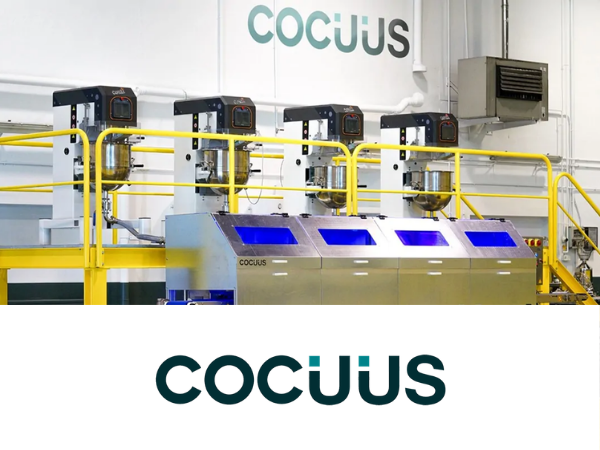
COCUUS was born out of experience in the hospitality industry and a passion for technology and innovation, launching its professional journey in June 2017. Founded by Patxi Larumbe and Daniel Rico, and following careers in industrial machinery design, laser technology, and robotics, they took on the challenge of approaching the culinary world through mechatronics.
We created COCUUS because we want to be part of the food transition toward a healthier and more sustainable future for the planet. Because we believe that technology and delicious, healthy, and sustainable food are not only compatible, but must go hand in hand.
Since then, COCUUS has focused and specialized in the biosynthesis of meat alternatives, both plant-based and animal-derived. These are disruptive and innovative solutions for the industry, appealing to consumers, and environmentally friendly.
Check out Challenge 6, which COCUUS has submitted to the Open Innovation program.
Challenge 6. “Enhance the texture and fibrousness of chicken products using MDM as a base”
In the development of reformulated meat products, COCUUS uses mechanically separated chicken meat (MSM) as its primary raw material. This lower-cost, more readily available ingredient allows the company to make use of parts of the animal that would otherwise be used for low-value purposes.
However, MDM has a critical limitation: it lacks its own fibrous structure, so the final product does not provide consumers with the characteristic texture and chewiness of a conventional cut of chicken.
Currently, COCUUS uses fibers, starches, and textured proteins to enhance texture. These ingredients work to some extent, but when applied to cutlet- or bacon-style reconstructions, they fail to replicate the texture of real meat. Furthermore, a limit has been reached: increasing the dosage no longer improves texture and may even impair the sensory experience. The visual appearance of the product, both raw and cooked, also remains far from that of the reference cut.
The challenge is to identify technologies or ingredients capable of providing real fibrous texture, structure, resistance to cutting and chewing, and a visual appearance similar to that of conventional meat products (cooked and raw) using a plant-based meat substitute (PMS) as a base, while keeping the ingredient list as minimal as possible. Approaches that recreate the fibrous architecture of whole chicken (next-generation textured proteins, mechanical fiber assembly, enzymatic technologies, scaffolding, etc.) will be evaluated.
Expected benefits
Implementing a solution in this area will enable Cocuus to make an impact across several key aspects of the business:
Superior sensory and visual quality: increased fiber content and texture, along with a visual appearance (both cooked and raw) that more closely resembles whole chicken, thereby enhancing the consumer experience in products such as chicken cutlets and bacon.
Optimizing lower-cost raw materials: making better use of MDM as a base material, maximizing the yield of the raw material stream without compromising the quality of the final product.
Strengthening the clean-label positioning: achieving the desired texture by exceeding current limits for fibers, starches, and textured proteins, while maintaining short, consumer-friendly ingredient lists.
What are you looking for in a partner?
COCUUS is seeking startups, technology centers, and teams specializing in protein texturization and meat restructuring that can impart a fibrous texture, bite, and a visual appearance similar to whole chicken to products made from meat meal, while maintaining a clean-label profile and competitive pricing.
The following will be given special consideration:
Protein texturing and structuring technologies: high-moisture extrusion, fiber assembly, scaffolding, fermentation, enzymatic technologies, or other approaches capable of generating true fibrous architecture from milk protein isolate (MPI), surpassing the current limitations of textured proteins and other products in formats such as cutlets or bacon.
Economic feasibility and cost control: the ability to propose solutions with raw material and processing costs that are consistent with the economics of the final product. This point is essential to the project’s viability.
Sensory and visual quality: the ability to evaluate and replicate parameters such as texture, juiciness, tenderness, and visual appearance of the product both raw and after cooking, ensuring the solution meets the standards for whole chicken.
Halal compliance: It will be considered a major advantage if the solution is suitable for halal certification.
Clean Label Vision: solutions that provide structure while pushing the boundaries of current additives, fibers, and starches, thereby improving the ingredient list compared to the current formulation.
Capacity for industrial co-development: willingness to collaborate with the COCUUS R&D team and validate the solution under real-world plant conditions, with a view to scaling it up.
Do you have any questions?
Write to us and we'll get back to you
The Open Innovation program is funded by
