

Challenge 18. “Sustainable Preservation and Packaging for Fresh-Cut Produce”
About Josenea
Josenea Bio is a social and vocational integration company belonging to the Josenea Labor Association, a nonprofit organization. Josenea was founded as a social and vocational integration center whose goal is to integrate socially excluded individuals through the creation of small business projects. The activities carried out have high social and environmental value, recognized for the quality of their products, the dignity of their workers, and their economic sustainability. Josenea conducts activities in the natural environment, such as the organic cultivation of medicinal plants and vegetables, environmental services, a composting plant for organic waste from the region, guided tours, an agri-food processing plant, and an organic distribution center.
Learn about Challenge 18, which Josenea has submitted to the Open Innovation program.
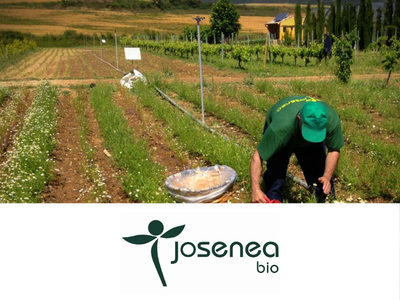
Challenge 18. “Sustainable Preservation and Packaging for Fresh-Cut Produce”
JOSENEA BIO’s value proposition is closely tied to product quality, organic sourcing, sustainability, and the continuous improvement of its packaging and business model. In fact, the company emphasizes its commitment to compostable and biodegradable materials, as well as the ongoing redesign of its packaging to reduce its environmental impact and enhance the user experience.
With this in mind, one of the key challenges is to address product preservation in fresh-cut solutions by developing recyclable and compostable packaging alternatives that, in addition to being sustainable, keep the product in optimal condition for as long as necessary.
The challenge is not limited to selecting a more sustainable material, but rather to understanding how the product should be packaged, what type of packaging is most suitable given its characteristics, and how to ensure a sufficient shelf life without compromising quality, food safety, functionality, or brand positioning. It is, therefore, a matter of striking a balance between preservation, practicality, sustainability, and commercial viability.
The main focus is on identifying innovative solutions that ensure proper product preservation and move toward more sustainable packaging formats that align with the company's values.
In particular, we will prioritize solutions that are capable of:
Analyze the product's preservation needs based on type and use.
Identify materials that are recyclable, compostable, or have a lower environmental impact.
Design packaging solutions that preserve quality, freshness, and functionality.
Extend the product's shelf life under optimal conditions.
Balancing sustainability with industrial and commercial operations.
Take into account regulatory, food safety, and labeling requirements.
Provide viable solutions for a phased implementation.
The goal is to move toward a packaging model that allows JOSENEA BIO to strengthen its environmental commitment without compromising on preservation, product quality, or the customer experience.
Expected benefits
Implementing a solution in this area would enable Josenea Bio to achieve benefits such as:
Longer product shelf life: improved preservation and reduced waste.
Better alignment with your value proposition: consistency between organic products and sustainable packaging.
Reducing environmental impact: incorporating more sustainable materials.
Improving the customer experience: packaging that is more functional, easier to understand, and aligned with the brand.
Market differentiation: strengthening our position against less sustainable alternatives.
Greater commercial viability of new product lines: facilitating the development of products with more stringent preservation requirements.
What are they looking for in a collaborator?
JOSENEA BIO is looking for partners who can bridge the gap between sustainability, technical expertise in materials, and the actual conservation needs of the product.
The following will be given special consideration:
Experience in sustainable food packaging.
Knowledge of recyclable, biodegradable, or compostable materials.
Ability to address conservation and service life challenges.
A practical, implementation-oriented approach.
Knowledge of food regulations and technical packaging requirements.
Ability to balance sustainability, cost, functionality, and quality.
It’s not just about replacing a material; it’s about developing a comprehensive packaging solution that works for the product, the process, and the market.
Do you have any questions?
Write to us and we'll get back to you
The Open Innovation program is funded by
