
Baztán-Bidasoa kicks off a series of workshops aimed at strengthening rural commerce, organized by the General Directorate of Commerce and Consumer Affairs and CEIN
The "Comercio con Raíz" series of regional meetings kicked off last Friday, November 6, in Bera
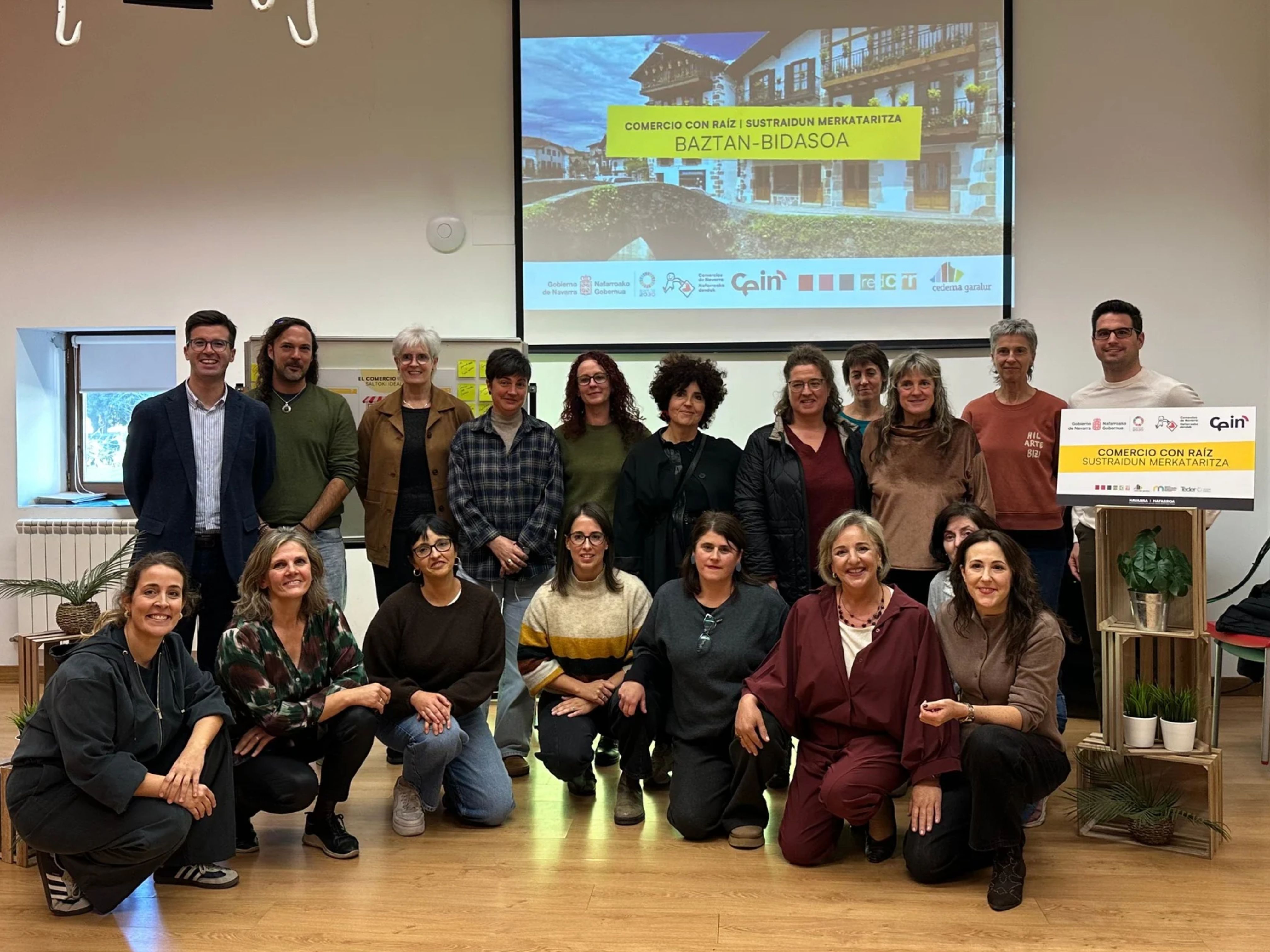
On November 6, Bera hosted the first session of the regional series of meetings titled “Comercio con Raíz | Sustraidun Merkataritza,” an initiative promoted by the Government of Navarre’s General Directorate of Commerce and CEIN, with the goal of strengthening rural commerce, raising awareness of local projects, and fostering the exchange of experiences among businesses, entrepreneurs, government officials, and local stakeholders.
The event began with a discussion on rural commerce as an essential infrastructure for social cohesion and the maintenance of economic activity in the Baztán-Bidasoa region, featuring Pablo Ezkurra, Director General of Commerce and Consumer Affairs for the Government of Navarre; Pilar Tellechea, head of the Business Creation Division at CEIN; and Andoni Martín and Itxaso Aleman, specialists from the Cederna-Garalur Association.
The event gave a platform to four leading businesses and projects in Baztán-Bidasoa that represent different aspects of the region’s commercial landscape:
- Isabel González, from Virgilio Oinetakoak (Elizondo), shared the history of a century-old shoe store that is deeply rooted in local life and has continually improved and adapted.
- Mari Carmen Larrainzar, of Cosas de Casa / Santesteban Interiorismo (Doneztebe), explained the process of bringing a new generation into the business, ensuring the continuity of a long-standing company.
- Mertxe Mendiburu presented Konektoma Neuropsychology (Bera) as an example of how talent and specialized, innovative services can also be developed in rural areas.
- Nekane Lasaga discussed the experience of taking over Kirolak Zela (Bera), highlighting the opportunities that the transfer of existing businesses offers for keeping commercial activity alive.
The session concluded with an interactive exercise that helped identify the main strengths and challenges facing local businesses in the region. Participants highlighted the value of personalized service, trust, and customer knowledge as the key hallmarks of local commerce. Among the future challenges, they pointed to connecting with younger generations, ensuring business continuity, and the need to better communicate what sets local businesses apart. Proposals were also shared to strengthen collaboration among businesses, showcase local talent, and facilitate generational succession and the adaptation of businesses to new consumer habits.